
3D Launch Trailer
Gunsen - The battle for Toshi Ranbo
Client: Epic Made
Role: 3D Animator, 2D Compositing, Localizations
Tools Used: Cinema4D, Redshift, After Effects, Illustrator, Photoshop
One of my favorite agency partners, Epic Made, reached out to ask: “Do you know anyone with 3D skills?”
At the time, I had dabbled in 3D. I had experience and curiosity, but I was also self aware of my limitations. Instead of overselling myself, I was honest about my experience level and my confidence to figure it out.
I also knew this project would push my abilities and make me a better artist.
Epic Made took a leap of faith and Instead of trusting me with just one 3D project, they handed me three projects to build their portfolio. Their goal was to create portfolio pieces to showcase new work into the 3D Board Game industry, and it was my job to help them look as good as they are.
And so we started Gunsen, The Battle for Toshi Ranbo.
The Challenge
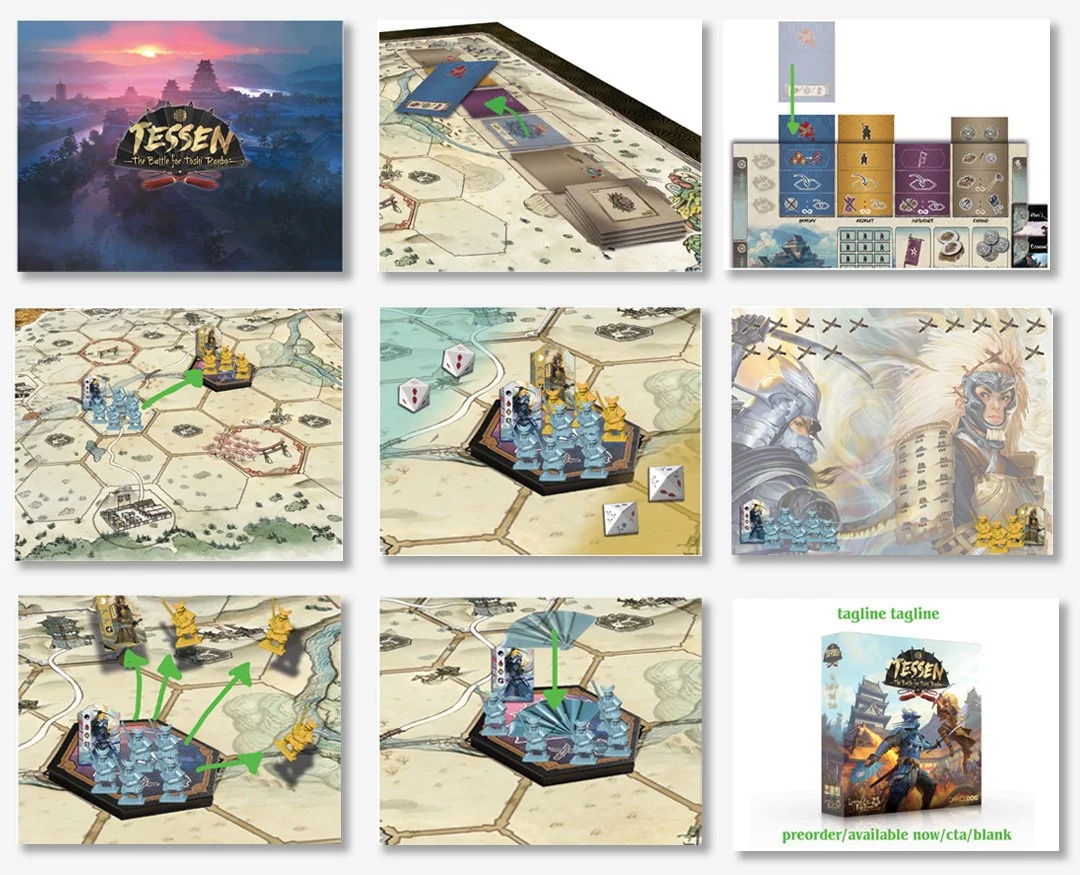
Asmodee, the end client, provided a storyboard to give us an understsanding of the story to tell. Epic Made and I could have executed it exactly as presented, but the goal wasn’t replication, it was elevation. Everyone wanted the video to feel cinematic, immersive, and memorable.
Epic Made and I expanded the opening by placing the standees and warriors on a mountain overlooking the city they were about to conquer. We added atmospheric smoke in the valley, birds crossing the sunrise, and intentional camera movement to create depth. Instead of a flat gameplay demonstration, we built a world.
At the same time, the constraints of this project were very real. The project had a fixed budget, yet needed to exist in both both horizontal and vertical formats, in addition to being delivered in six languages. To simplify localization and avoid expensive revisions, we focused on “Show, Don’t Tell” and avoided voiceovers and heavy text. The storytelling needed to work visually, even if the audio was muted
Building It Right
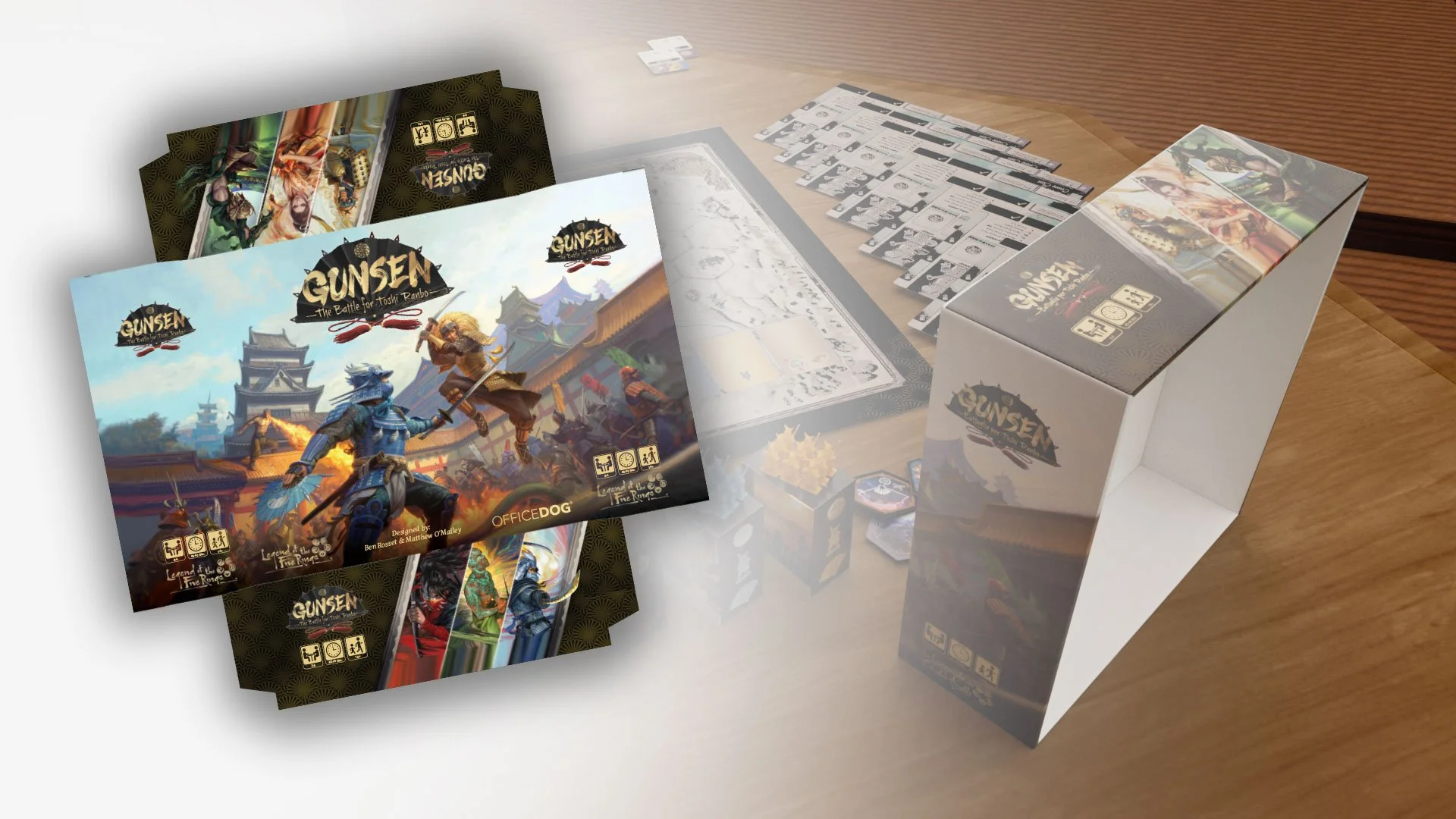
Because the game hadn’t been released yet, the only reference available was the final print-ready PDF of the box. I used that file to build a 1:1 digital replica in Cinema 4D, measuring every panel in Illustrator and recreating the exact millimeter dimensions before UV mapping the artwork properly.
That extra care paid off. Midway through production, the game’s title changed. Instead of rebuilding assets, updating the box became a simple material swap. The same system also made it easy to prepare region-specific artwork for each language version without relighting or restructuring scenes.
That wasn’t just modeling — it was building flexibility into the pipeline.
Technical Decisions
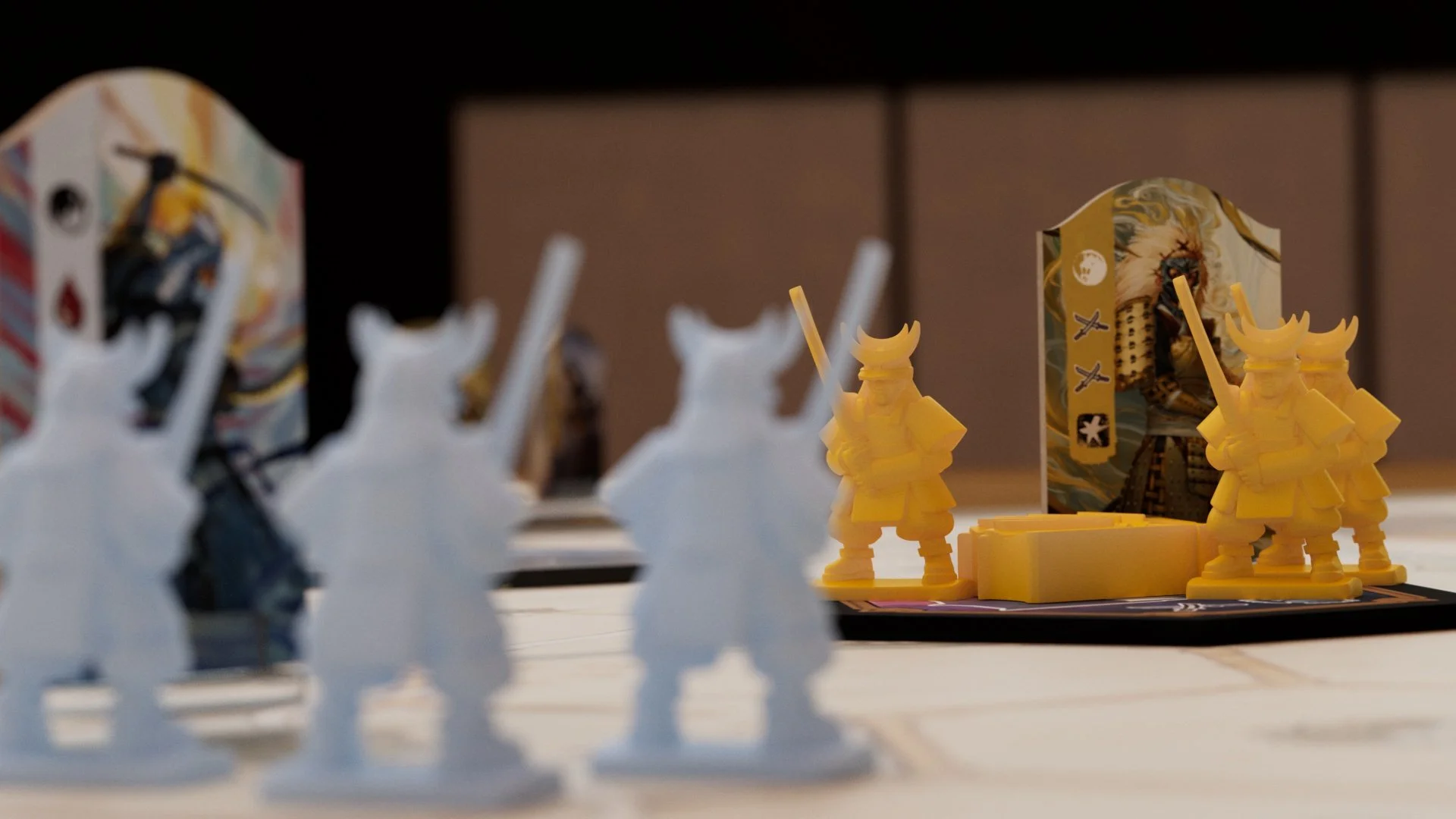
Once the 3D system was in place, I had a decision to make. I could pivot to Unreal Engine for faster real-time rendering, or I could stay in Cinema 4D and use Redshift to preserve the cinematic look we were chasing.
Unreal would have reduced render time, but the aesthetic would have leaned more “game engine” than cinematic tabletop. Given the tone of the storyboard and the expectations of the agency, visual quality mattered more than speed.
So I stayed in Cinema 4D and solved the bottleneck another way. I upgraded my machine with a second GPU and structured overnight render passes so that approvals could continue during the day. The goal wasn’t just beautiful frames — it was keeping the agency workflow smooth and predictable.
Epic Made took a chance on me, and the last thing I wanted to do was to make them nervous. As a freelancer, my job isn’t just animation, it’s to reduce risk.
Deliverables
Once the primary horizontal version was approved, we created vertical versions with adjusted camera framing to preserve composition in a 9:16 format. After localization copy was delivered, I built clean language swaps in After Effects and prepared all exports for delivery.
In total, the project delivered twelve versions across six languages — all generated from one modular 3D pipeline.
The system scaled cleanly because it was designed that way from the start.
What This Project Demonstrates
This project wasn’t just about stepping into 3D. It was about stepping into it responsibly.
It shows that I don’t oversell my capabilities, but when I commit, I build the infrastructure to support the work properly. It shows that I make technical decisions based on long-term value, not short-term convenience. And it shows that I prioritize the agency’s reputation just as much as the visuals on screen.
If you’re looking for a creative partner who can elevate your ideas while protecting your timeline, budget, and client relationships, that’s exactly how I approach every project.
I’m Drysen.
I make complicated messages simple and sexy, and I build them in a way that holds up under pressure.
Contact.
Drysen Carsten
Motion | Video | Podcasts | Producing | Experience Consulting
e. drysen.carsten@gmail.com
p. (605) 680.2624
Instagram | TikTok | Linkedin